Free Electrical Panel Schedule Template
When it comes to managing electrical systems in residential and commercial buildings, the Electrical Panel Schedule form plays a pivotal role. This essential document provides a detailed overview of the electrical panel's layout, including circuit breakers, their corresponding circuits, and the load each circuit is designed to handle. By organizing this information clearly, the form helps electricians, contractors, and building owners ensure that the electrical system operates safely and efficiently. Additionally, the panel schedule serves as a vital reference point for troubleshooting and maintenance, enabling quick identification of circuits during repairs or upgrades. It typically includes information such as circuit numbers, descriptions of the loads, and the amperage ratings of breakers, which all contribute to a comprehensive understanding of the electrical distribution within a property. Understanding the components of this form can significantly enhance safety and functionality, making it an indispensable tool in electrical management.
Document Specifics
| Fact Name | Description |
|---|---|
| Purpose | The Electrical Panel Schedule form is used to document the layout and specifications of an electrical panel, including circuit information and load calculations. |
| Components | This form typically includes details such as circuit numbers, load types, amperage ratings, and breaker sizes. |
| Compliance | Filling out this form helps ensure compliance with local electrical codes and safety standards, which vary by state. |
| State-Specific Laws | In California, for instance, the California Electrical Code governs the requirements for electrical installations, including the use of the Electrical Panel Schedule form. |
| Importance | A well-prepared Electrical Panel Schedule is crucial for electricians and inspectors to assess the safety and efficiency of electrical systems. |
Similar forms
The Electrical Panel Schedule form is an essential document in electrical engineering and construction. It serves as a comprehensive guide to the electrical systems in a building. However, it shares similarities with several other important documents. Here are five documents that resemble the Electrical Panel Schedule form, along with explanations of their similarities:
- Load Calculation Sheet: Like the Electrical Panel Schedule, a Load Calculation Sheet outlines the electrical load requirements for a building. Both documents help ensure that the electrical system can safely handle the expected demand.
Sample Tax Return Transcript: The https://fillable-forms.com/ form provides a summary of a taxpayer's tax return information as submitted to the IRS. This form includes critical details such as income, deductions, and tax liabilities that were reported for a specific tax period. Taxpayers often use the transcript for loan applications, verifying income, or resolving any discrepancies with the IRS.
- Wiring Diagram: A Wiring Diagram provides a visual representation of the electrical system's layout, similar to how the Electrical Panel Schedule organizes information about circuits and connections. Both documents are crucial for understanding how electrical components interact.
- One-Line Diagram: The One-Line Diagram simplifies complex electrical systems into a single line representation. It shares the Electrical Panel Schedule's goal of clarifying the system’s structure and components, making it easier for engineers and technicians to analyze and troubleshoot.
- Circuit Breaker Schedule: This document lists all circuit breakers in a panel, detailing their ratings and corresponding circuits. It is similar to the Electrical Panel Schedule, which also catalogs circuit information, helping to manage and maintain the electrical system effectively.
- Maintenance Log: A Maintenance Log records inspections and repairs of electrical systems. While it serves a different purpose, it complements the Electrical Panel Schedule by providing a history of the system's performance and any issues that have arisen over time.
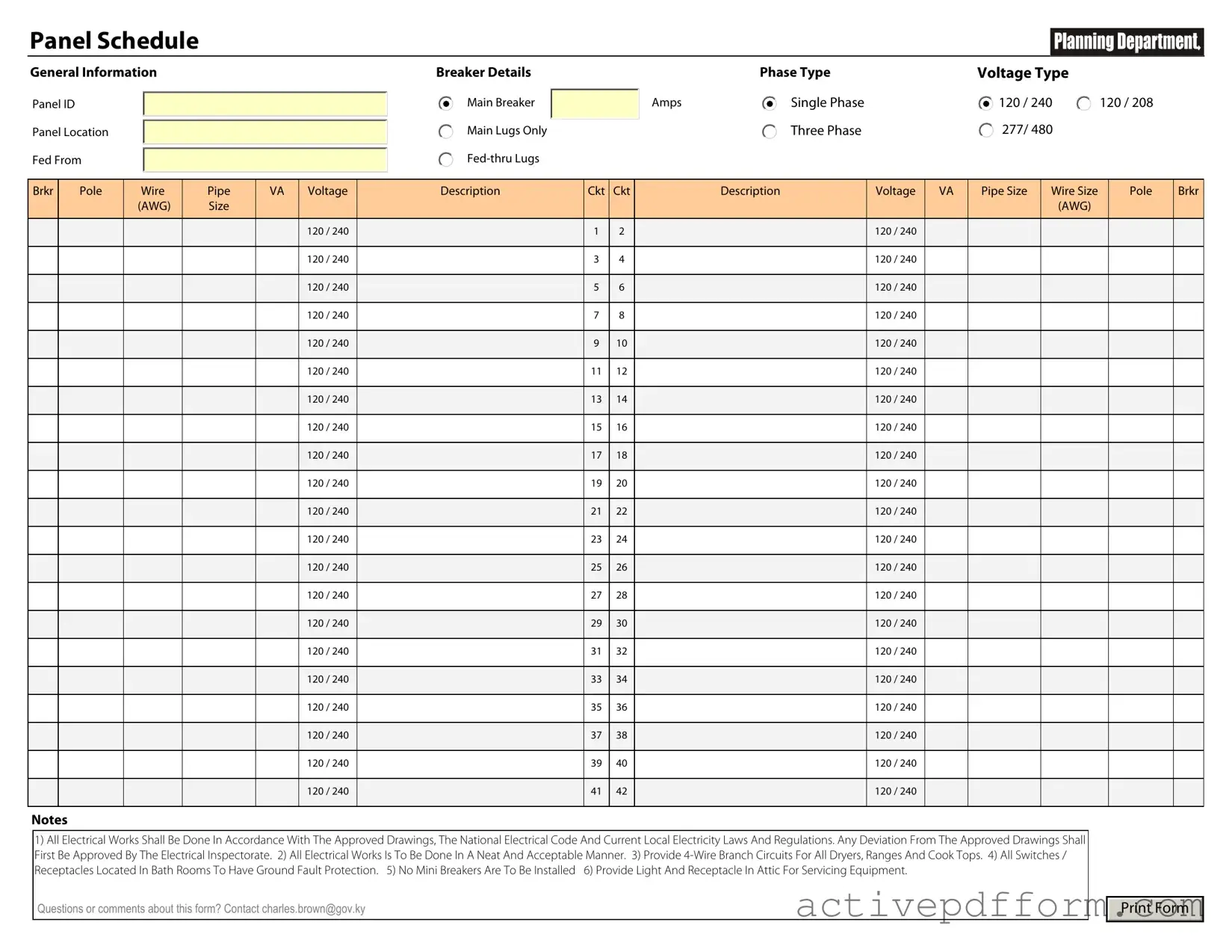
Electrical Panel Schedule Example
Panel Schedule
General Information
Panel ID
Panel Location
Fed From
Breaker Details
Main Breaker
Main Lugs Only
|
Phase Type |
Voltage Type |
|
Amps |
Single Phase |
120 / 240 |
120 / 208 |
|
Three Phase |
277/ 480 |
120 / 240 |
|
|
|
Brkr |
Pole |
Wire |
Pipe |
VA |
Voltage |
Description |
Ckt |
Ckt |
Description |
Voltage |
VA |
Pipe Size |
Wire Size |
Pole |
Brkr |
|
|
(AWG) |
Size |
|
|
|
|
|
|
|
|
|
(AWG) |
|
|
|
|
|
|
|
|
|
|
|
|
|
|
|
|
|
|
|
|
|
|
|
120 / 240 |
|
1 |
2 |
|
120 / 240 |
|
|
|
|
|
|
|
|
|
|
|
|
|
|
|
|
|
|
|
|
|
|
|
|
|
|
120 / 240 |
|
3 |
4 |
|
120 / 240 |
|
|
|
|
|
|
|
|
|
|
|
|
|
|
|
|
|
|
|
|
|
|
|
|
|
|
120 / 240 |
|
5 |
6 |
|
120 / 240 |
|
|
|
|
|
|
|
|
|
|
|
|
|
|
|
|
|
|
|
|
|
|
|
|
|
|
120 / 240 |
|
7 |
8 |
|
120 / 240 |
|
|
|
|
|
|
|
|
|
|
|
|
|
|
|
|
|
|
|
|
|
|
|
|
|
|
120 / 240 |
|
9 |
10 |
|
120 / 240 |
|
|
|
|
|
|
|
|
|
|
|
|
|
|
|
|
|
|
|
|
|
|
|
|
|
|
120 / 240 |
|
11 |
12 |
|
120 / 240 |
|
|
|
|
|
|
|
|
|
|
|
|
|
|
|
|
|
|
|
|
|
|
|
|
|
|
120 / 240 |
|
13 |
14 |
|
120 / 240 |
|
|
|
|
|
|
|
|
|
|
|
|
|
|
|
|
|
|
|
|
|
|
|
|
|
|
120 / 240 |
|
15 |
16 |
|
120 / 240 |
|
|
|
|
|
|
|
|
|
|
|
|
|
|
|
|
|
|
|
|
|
|
|
|
|
|
120 / 240 |
|
17 |
18 |
|
120 / 240 |
|
|
|
|
|
|
|
|
|
|
|
|
|
|
|
|
|
|
|
|
|
|
|
|
|
|
120 / 240 |
|
19 |
20 |
|
120 / 240 |
|
|
|
|
|
|
|
|
|
|
|
|
|
|
|
|
|
|
|
|
|
|
|
|
|
|
120 / 240 |
|
21 |
22 |
|
120 / 240 |
|
|
|
|
|
|
|
|
|
|
|
|
|
|
|
|
|
|
|
|
|
|
|
|
|
|
120 / 240 |
|
23 |
24 |
|
120 / 240 |
|
|
|
|
|
|
|
|
|
|
|
|
|
|
|
|
|
|
|
|
|
|
|
|
|
|
120 / 240 |
|
25 |
26 |
|
120 / 240 |
|
|
|
|
|
|
|
|
|
|
|
|
|
|
|
|
|
|
|
|
|
|
|
|
|
|
120 / 240 |
|
27 |
28 |
|
120 / 240 |
|
|
|
|
|
|
|
|
|
|
|
|
|
|
|
|
|
|
|
|
|
|
|
|
|
|
120 / 240 |
|
29 |
30 |
|
120 / 240 |
|
|
|
|
|
|
|
|
|
|
|
|
|
|
|
|
|
|
|
|
|
|
|
|
|
|
120 / 240 |
|
31 |
32 |
|
120 / 240 |
|
|
|
|
|
|
|
|
|
|
|
|
|
|
|
|
|
|
|
|
|
|
|
|
|
|
120 / 240 |
|
33 |
34 |
|
120 / 240 |
|
|
|
|
|
|
|
|
|
|
|
|
|
|
|
|
|
|
|
|
|
|
|
|
|
|
120 / 240 |
|
35 |
36 |
|
120 / 240 |
|
|
|
|
|
|
|
|
|
|
|
|
|
|
|
|
|
|
|
|
|
|
|
|
|
|
120 / 240 |
|
37 |
38 |
|
120 / 240 |
|
|
|
|
|
|
|
|
|
|
|
|
|
|
|
|
|
|
|
|
|
|
|
|
|
|
120 / 240 |
|
39 |
40 |
|
120 / 240 |
|
|
|
|
|
|
|
|
|
|
|
|
|
|
|
|
|
|
|
|
|
|
|
|
|
|
120 / 240 |
|
41 |
42 |
|
120 / 240 |
|
|
|
|
|
|
|
|
|
|
|
|
|
|
|
|
|
|
|
|
|
Notes
1)All Electrical Works Shall Be Done In Accordance With The Approved Drawings, The National Electrical Code And Current Local Electricity Laws And Regulations. Any Deviation From The Approved Drawings Shall First Be Approved By The Electrical Inspectorate. 2) All Electrical Works Is To Be Done In A Neat And Acceptable Manner. 3) Provide
Receptacles Located In Bath Rooms To Have Ground Fault Protection. 5) No Mini Breakers Are To Be Installed 6) Provide Light And Receptacle In Attic For Servicing Equipment.
Questions or comments about this form? Contact charles.brown@gov.ky
Print Form
Understanding Electrical Panel Schedule
What is an Electrical Panel Schedule form?
An Electrical Panel Schedule form is a document that outlines the distribution of electrical circuits within a panel. It details the specific circuits, their amperage ratings, and the loads they serve. This form is essential for ensuring that the electrical system operates safely and efficiently.
Why is an Electrical Panel Schedule important?
This schedule is crucial for several reasons. It helps electricians and contractors identify how power is distributed throughout a building. By having a clear understanding of the circuits, they can troubleshoot issues more effectively, plan for future expansions, and ensure compliance with electrical codes.
Who should complete the Electrical Panel Schedule form?
The form should be completed by a qualified electrician or electrical engineer. These professionals have the knowledge and expertise to accurately assess the electrical loads and ensure that the schedule meets all safety and regulatory standards.
What information is typically included in the form?
The form usually includes details such as the circuit number, description of the load, amperage, voltage, and the location of the circuit. Additionally, it may specify the type of breaker used and any special notes regarding the circuit's function or requirements.
How often should the Electrical Panel Schedule be updated?
It is advisable to update the Electrical Panel Schedule whenever modifications are made to the electrical system. This includes adding new circuits, changing loads, or replacing equipment. Regular updates ensure that the schedule remains accurate and useful for maintenance and safety checks.
What happens if the Electrical Panel Schedule is not accurate?
An inaccurate schedule can lead to various issues, including overloaded circuits, equipment failure, and potential fire hazards. It may also result in difficulties during inspections or when performing maintenance. Ensuring accuracy is vital for safety and compliance.
Can I create my own Electrical Panel Schedule?
While it is possible to create your own schedule, it is highly recommended to consult with a licensed electrician. They can provide valuable insights and ensure that the schedule adheres to local codes and standards, ultimately protecting your property and its occupants.
Is there a standard format for the Electrical Panel Schedule?
There is no universally mandated format, but most schedules follow a similar structure to ensure clarity and usability. Many professionals use templates that include all necessary fields. Consistency in format helps in understanding and maintaining the schedule over time.
Where can I find a template for the Electrical Panel Schedule?
Templates for Electrical Panel Schedules can often be found online, through electrical supply stores, or from professional organizations. Many electrical contractors may also provide their own templates or examples based on industry best practices.
Dos and Don'ts
When filling out the Electrical Panel Schedule form, it's important to follow specific guidelines to ensure accuracy and compliance. Here are five things you should and shouldn't do:
- Do double-check all information before submission. Accurate data prevents delays and errors.
- Do use clear and legible handwriting or type the information. Clarity is essential for proper understanding.
- Do include all necessary details, such as circuit numbers and load calculations. Completeness is key.
- Don't leave any sections blank unless instructed. Missing information can lead to complications.
- Don't use abbreviations that are not universally understood. Clear communication is vital for safety and compliance.
Check out Common Templates
Sdi California - Incorrect information on the form can result in significant delays in benefit approval.
For those looking to understand the eviction process further, the Arizona Notice to Quit form can be accessed easily; it is vital for landlords to use this official document to ensure they follow the legal procedures when requesting tenants to vacate. To download and fill out the necessary forms, refer to Arizona PDF Forms, which provides a comprehensive resource for this and other important legal documents.
Dh 680 Form - Part C is designated for children with permanent medical exemptions and requires clinical reasoning for the exemption.